Profit-First Amazon Strategy: Why Revenue Growth Can Hide a Shrinking Business
September 28, 2026
How do you calculate real profit per SKU on Amazon?
Start from the sale price and subtract every deduction before you call anything profit: landed cost of goods including freight and duties, Amazon's referral fee of roughly 15 percent, FBA fulfillment and storage fees, returns and the cost of unsellable returned units, the ad spend allocated to that SKU, and any long-term storage or aged-inventory surcharges. What is left is your true net margin per SKU, and it is the only number worth using to decide which products to cut, fix, or scale.
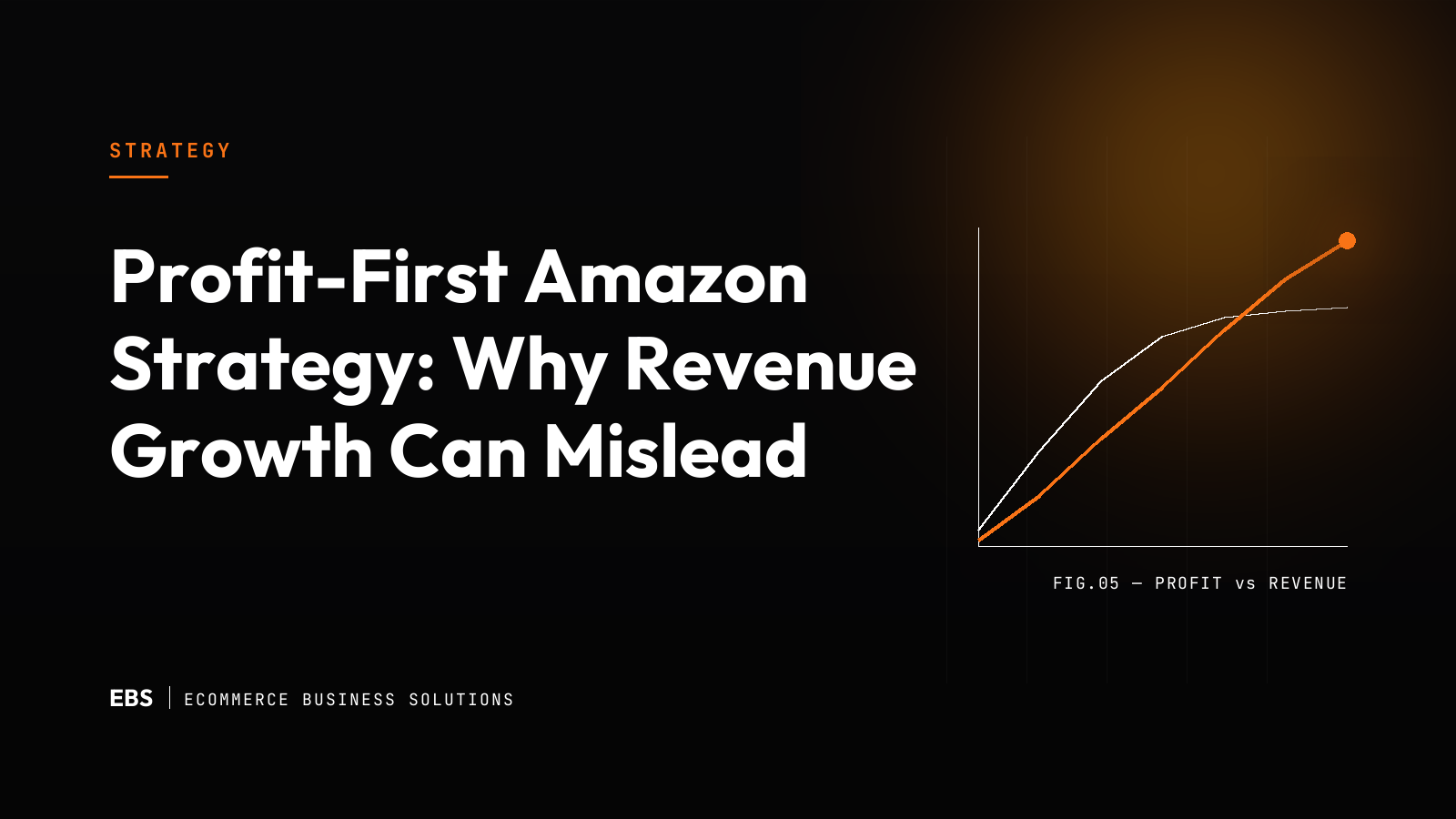
It's possible to grow Amazon revenue 40% and end the year with less cash in the bank. Revenue is a vanity number until you subtract everything Amazon and your supply chain take out of it. A profit-first strategy starts from the bottom line and works up.
Know your true net margin per SKU
"Profit" on Amazon hides behind a stack of deductions. For each SKU, subtract all of these from the sale price:
- Cost of goods (landed, including freight and duties)
- Referral fee (typically ~15%)
- FBA fulfillment and storage fees
- Returns and the cost of unsellable returned units
- Ad spend allocated to that SKU
- Long-term storage and aged-inventory surcharges
What's left is your real margin. Run this and most sellers find a handful of SKUs quietly losing money on every sale - funded by their winners.
Cut, fix, or scale - decide per SKU
Once you can see true margin, every SKU gets one of three labels:
- Scale - healthy margin and demand; this is where ad budget and inventory go
- Fix - good demand, thin margin; attack the fees (right-size packaging, renegotiate COGS, reduce returns) before spending another ad dollar
- Cut - chronic money-losers; delisting them often raises total profit and frees cash and storage
Returns are a margin line, not an afterthought
In many categories, returns quietly erase 20-30% of profit. A clearer listing, accurate sizing, and better A+ Content reduce returns directly - which means listing quality isn't just a conversion lever, it's a margin lever.
Use TACoS to judge advertising honestly
Total Advertising Cost of Sales (ad spend ÷ total revenue) tells you whether ads are building a business or renting sales. If TACoS keeps climbing while organic rank doesn't improve, you're buying revenue you can't keep. If TACoS holds while sales grow, your ads are lifting organic - that's compounding, profitable growth.
Protect cash flow, not just margin
Profit on paper isn't cash in hand. Amazon's payout cycle, inventory tied up in FBA, and reserves all delay your cash. A profit-first operator plans purchasing around cash flow so growth doesn't strangle the business it's supposed to feed.
The takeaway
Revenue is the headline; profit is the business. Get true margin per SKU, sort into scale/fix/cut, treat returns and TACoS as margin levers, and manage cash as carefully as you manage rank. Brands that obsess over the bottom line don't just grow - they keep what they earn.
Want a profit-first breakdown of your catalog? Book a free Amazon audit.